
 Must Do
Sea Turtle Release Program
Conservation & Ecotourism with Marine Biologists
Conservation Ecotourism
Protect these amazing ancient marine animals
Explora Vallarta invites you to be part of the sea turtle conservation adventure, the most fascinating experience in Puerto Vallarta and Riviera Nayarit. Join our team of Marine Biologists who will take you into the mysterious life of these marine reptiles.
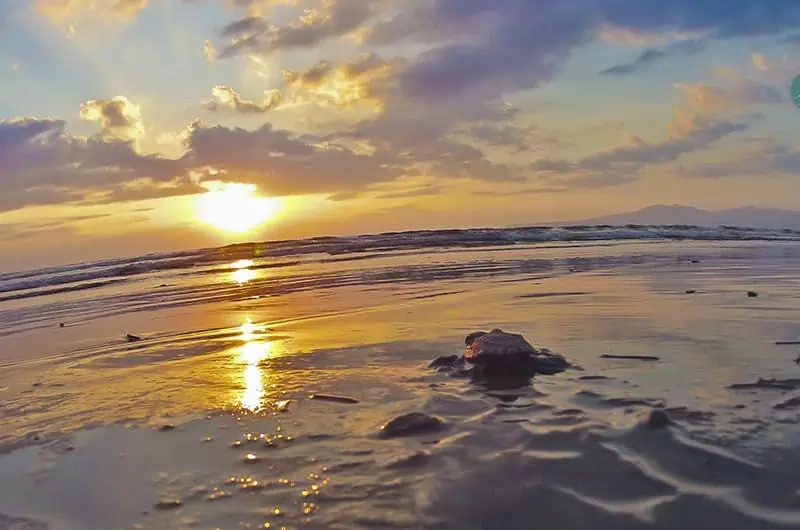
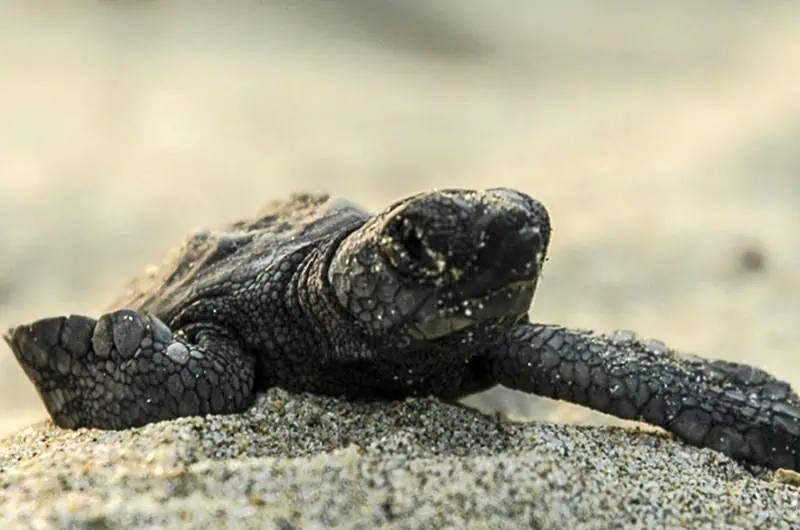
Sea turtles arrive at our beaches to lay eggs between July and December. Our job is to protect them and safeguard the eggs in camps until the moment the beautiful baby turtles are born and released into the sea under scientific protocols with total "Passion and Respect for nature". [Image of baby sea turtles hatching]
Become an Eco-Volunteer
With your visit, you will contribute to scientific research and conservation. Mexico has 6 of the 7 species of sea turtles on the planet. Practice Responsible Tourism!
What's included?
- Visit to the Turtle Camp.
- Educational talk on conservation.
- Biologist and Naturalist Guides.
- Release of baby turtles.
- Donation to conservation project.
- Water, juice, and energy bars.
What to bring?
- Light clothing and sneakers.
- Repellent (Biodegradable).
- Windbreaker or raincoat.
- Plastic bag for electronics.
- Camera with plenty of memory.
Book Your Spot
Adult Price
$64 USD
Child Price (4-11 yrs)
$40 USD
Schedule: 6:30 pm to 9:00 pm
Operation: Daily
Family & Scientific Company
Meet your expert guides
We are Biologists dedicated to protecting what we love most: the ocean.

Biol. Jorge Morales
Marine Biologist

Fabiola Flores
Naturalist Guide
What our explorers say
"Seeing the baby turtles reach the sea is a life-changing experience. Highly recommended!"
- Carlos M.
"The best way to learn about the ecosystem. The biologists are excellent at explaining everything."
- Sarah L.
Conservation Gallery


Sea Turtle Encyclopedia
As Marine Biologists, our mission is to inform. Turtles are prehistoric reptiles essential for the balance of the oceans. Here we answer your scientific questions about these fascinating beings. [Image of the sea turtle life cycle]
110 Million Years of History
Sea turtles have navigated our oceans for 110 million years. They survived the extinction of the dinosaurs and have successfully adapted to the planet's changes. However, today they face their greatest challenge: human activity.
Did you know that only 1 in 1,000 baby turtles will reach adulthood?
Reaching maturity takes them decades (between 12 and 30 years depending on the species). Therefore, our main goal is to produce healthy hatchlings that have the best chance of surviving and repopulating our seas.
Species in Mexico
Our country receives 6 of the 7 species in the world:
- Olive Ridley (Lepidochelys olivácea)
- Loggerhead (Caretta caretta)
- Green/Black (Chelonia mydas)
- Leatherback (Dermochelys coriacea)
- Hawksbill (Eretmochelys imbricata)
- Kemp's Ridley (Lepidochelys kempii)
*The Flatback Turtle (Natator depressus) is endemic to Australia.
Biology and Behavior
How many species exist in the world?
Currently, seven species are recognized: Leatherback, Green, Loggerhead, Kemp's Ridley, Hawksbill, Olive Ridley, and Flatback. On our expeditions, we focus primarily on protecting the Olive Ridley species, the most common in Vallarta.
How do they breathe underwater?
Although they spend most of their lives submerged, they have lungs and need to emerge to inhale air. Thanks to their low metabolism, they can make prolonged dives and rest underwater for extensive periods.
What is the life expectancy of a sea turtle?
They are slow-growing animals with great longevity. Depending on the species and habitat conditions, they can live between 50 and 90 years.
Is it true that temperature defines whether they are male or female?
That's correct! Unlike other animals, sex is determined by the temperature of the sand during incubation: warmer climates generate females, while cooler temperatures produce males.
Do they have teeth to eat?
They do not have teeth. Instead, they have developed powerful jaws made of keratin (material similar to our fingernails) adapted to crush or cut algae, jellyfish, and crustaceans.
How often do they come out to nest?
They do not nest every year; they usually do so every 2 or 3 years. However, in a single nesting season, a female can lay between 2 to 6 different clutches.
Conservation and Rescue
What are the main threats to their survival?
They face critical challenges such as plastic pollution, chemical spills, incidental capture in industrial fishing nets, and the loss of beaches due to coastal development and climate change.
What should I do if I find a stranded turtle on the beach?
The most important thing is NOT to try to return it to the sea or handle it to warm it up. You must report it immediately to local authorities or conservation groups so that expert biologists can evaluate its health status.
How can I contribute to their protection?
You can help by participating in our Responsible Tourism programs, supporting scientific research, reducing plastic use, and spreading educational information about their ecological importance.
Scientific Curiosities
Which is the largest turtle on the planet?
The Leatherback Turtle is the giant of the oceans. It is the only one that does not have a hard bony shell; instead, it has flexible and resistant skin similar to leather that allows it to descend to great depths.
How many turtles manage to reach adulthood?
Sadly, it is estimated that only one in every thousand hatchlings survives to maturity. The high rate of natural predation and human impact make every release at our camp a vital success for the species.
Complementary Experiences
Must Do
 Adventure